Right here in Huntsville
Basement Finishing Harvest Al in Huntsville
- Built around Huntsville's climate, not a template
- Clear, itemized quotes before work starts
- No pressure to sign on the spot
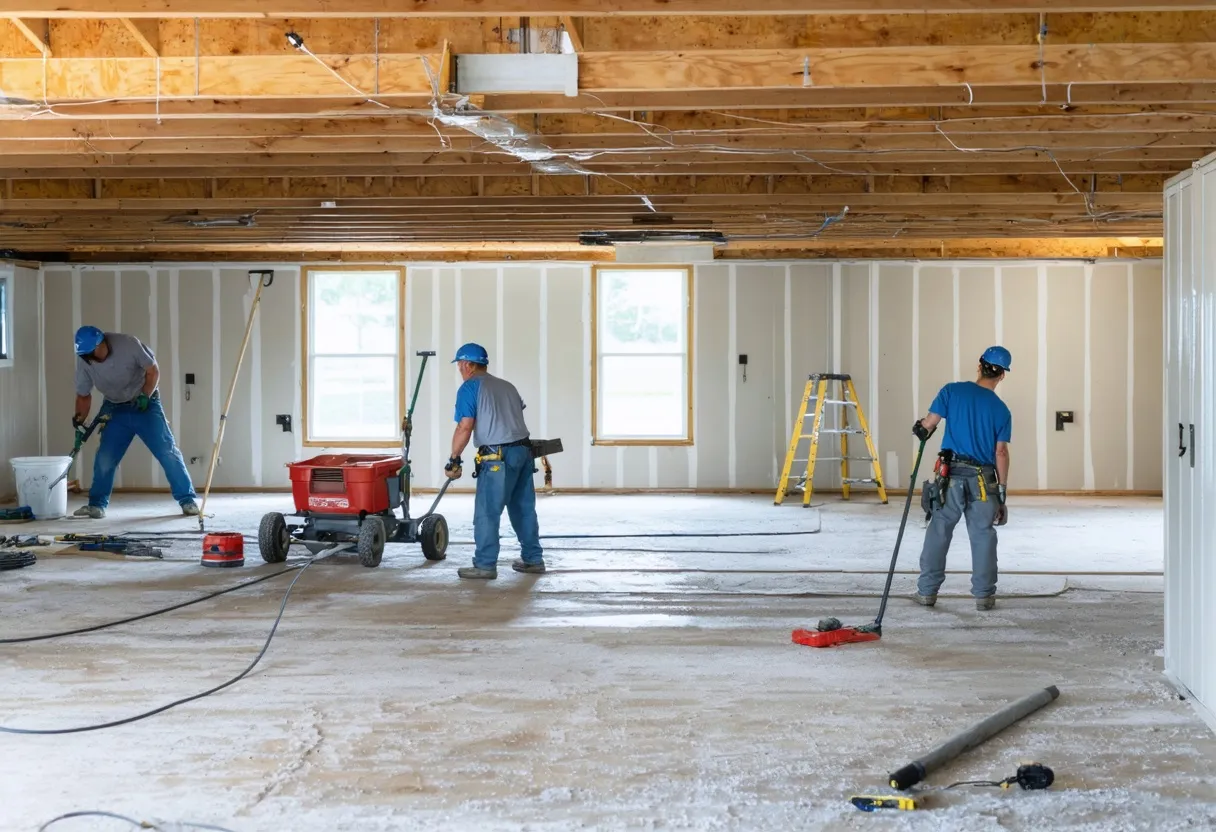
Basement finishing in Harvest, AL almost always starts from the same point: an unfinished, builder-grade basement that was framed and roughed-in when the house was built but never taken further. Harvest's newest subdivisions grew fast on the strip between Huntsville and Athens, and a lot of that construction included daylight or full basements poured to expand square footage without the cost of finishing it at closing. That leaves homeowners with a concrete shell, exposed joists, and a rough electrical panel — a real asset, but not a livable room yet.
We treat a builder-grade Harvest basement differently than a retrofit in an older Huntsville neighborhood. New-construction basements usually have better original waterproofing and more predictable framing, but they also come with builder shortcuts worth checking before finish work starts: unsealed penetrations where plumbing and electrical run through the foundation, minimal or no interior drainage, and HVAC rough-ins sized for the main floor rather than added square footage. Getting that right at the start is what makes the difference between a finished basement that holds up through Madison County's storm season and one that needs to be reopened in five years.
01Signs Your Harvest Builder Basement Is Ready to Finish
02Storm Shelters and Code-Driven Safe Rooms in a Harvest Basement Finish
Madison County sits squarely in a severe-weather corridor, and Alabama's storm history means a basement finish here is a genuine opportunity, not just an add-on. When we finish a basement in Harvest, we look at whether a hardened, code-compliant storm shelter or safe room can be built into the layout — typically inside an interior corner with reinforced walls and a rated door, engineered to the applicable safe-room standards rather than a finished closet labeled "storm room" after the fact.
Why this matters more in new subdivisions
Newer Harvest developments often don't have mature tree cover or older masonry construction to slow wind-driven debris, and many of these homes were built with the basement as the only true below-grade space on the lot. Framing a code-compliant shelter into the finish plan from day one — with its own structural detailing, door hardware, and ventilation — is far more cost-effective than retrofitting one into a basement that's already drywalled and carpeted.
Permitting for shelter construction runs alongside the rest of the basement permit, and we handle that coordination as part of a licensed, insured project scope rather than treating it as a separate contractor's job.
03From Unfinished Builder Basement to Finished Living Space
We inspect the existing slab, framing, drainage, and electrical rough-ins specific to how the home was originally built, not a generic checklist.
Even a basement with no history of water intrusion gets a humidity and drainage review before framing is priced, since Alabama's clay soils hold moisture against foundation walls year-round.
We finalize room layout, decide whether a hardened safe room fits the plan, and confirm HVAC and electrical capacity before submitting for permit.
Framing, plumbing, electrical, insulation, drywall, and flooring proceed under the applicable Madison County permits for your scope.
We review the completed basement against the original written estimate and warranty terms before the project is considered done.
04Licensed, Insured, and Warrantied in Writing
Basement finishing touches framing, electrical, plumbing, and in some cases shelter construction — work that belongs with a licensed, insured crew, not a side project. Our coverage and written warranty terms are documented as part of your estimate before any work begins, so you know exactly what's protected.
05Serving Harvest and the Rest of Madison County's Growth Corridor
Harvest sits inside one of the fastest-growing pockets of the Huntsville metro, and that growth is exactly why so many basements here are sitting unfinished — builders poured the shell to keep new-construction prices competitive, leaving the finish-out to homeowners once they've settled in. We work basements throughout Harvest's subdivisions alongside projects in Huntsville, Madison, Athens, and Decatur, and the terrain differences across that footprint matter: a slab-and-crawlspace conversion in a flat Harvest subdivision is a different structural job than a hillside walkout basement built into the foothills near Monte Sano or Hampton Cove, and we scope each one for the ground it's actually built on rather than applying a one-size approach.
That regional range also means we've seen how different jurisdictions across Madison County handle basement permitting, egress requirements, and storm-shelter inspections — knowledge that keeps a Harvest project moving instead of stalling at the permit desk.
06Basement Finishing in Harvest, AL: Common Questions
Our basement was left unfinished by the builder — is that different from finishing an older basement?
Usually easier. Builder-grade basements in newer Harvest subdivisions typically have more consistent framing and better original waterproofing than older retrofits, though we still verify drainage and rough-in capacity before pricing the job.
What drives basement finishing cost in Harvest, AL?
Square footage, whether a bathroom or wet bar adds plumbing to the scope, ceiling height and any structural work for HVAC or egress, and material tier all move the number. We provide itemized, per-square-foot pricing in the written estimate rather than one lump sum.
Can a storm shelter or safe room be added during the basement finish?
Yes, and it's most cost-effective to plan it into the layout from the start rather than retrofitting one later. We design and permit code-compliant shelter construction as part of the same project.
Do HOA rules in newer Harvest subdivisions affect basement finishing?
Some newer developments have architectural or permitting review requirements. We coordinate with the applicable county permitting process for your project, and can work alongside any HOA documentation you provide.
Will finishing my basement require a permit in Madison County?
Most projects that add electrical, plumbing, a bedroom, or a storm shelter require permits. As a licensed, insured contractor, we handle that permitting as part of the project scope.
Is a dehumidifier necessary if the basement seems dry?
Yes, in nearly every case. North Alabama's humidity gets absorbed into drywall and flooring over time even without visible water, so a properly sized dehumidifier is built into the finish plan rather than added afterward.
Get Your Free Quote
Tell us about your space and we'll put together a straightforward quote — no pressure, no obligation.
Ready to Talk About Your Basement?
Get a clear, no-obligation quote built around your home's actual conditions.